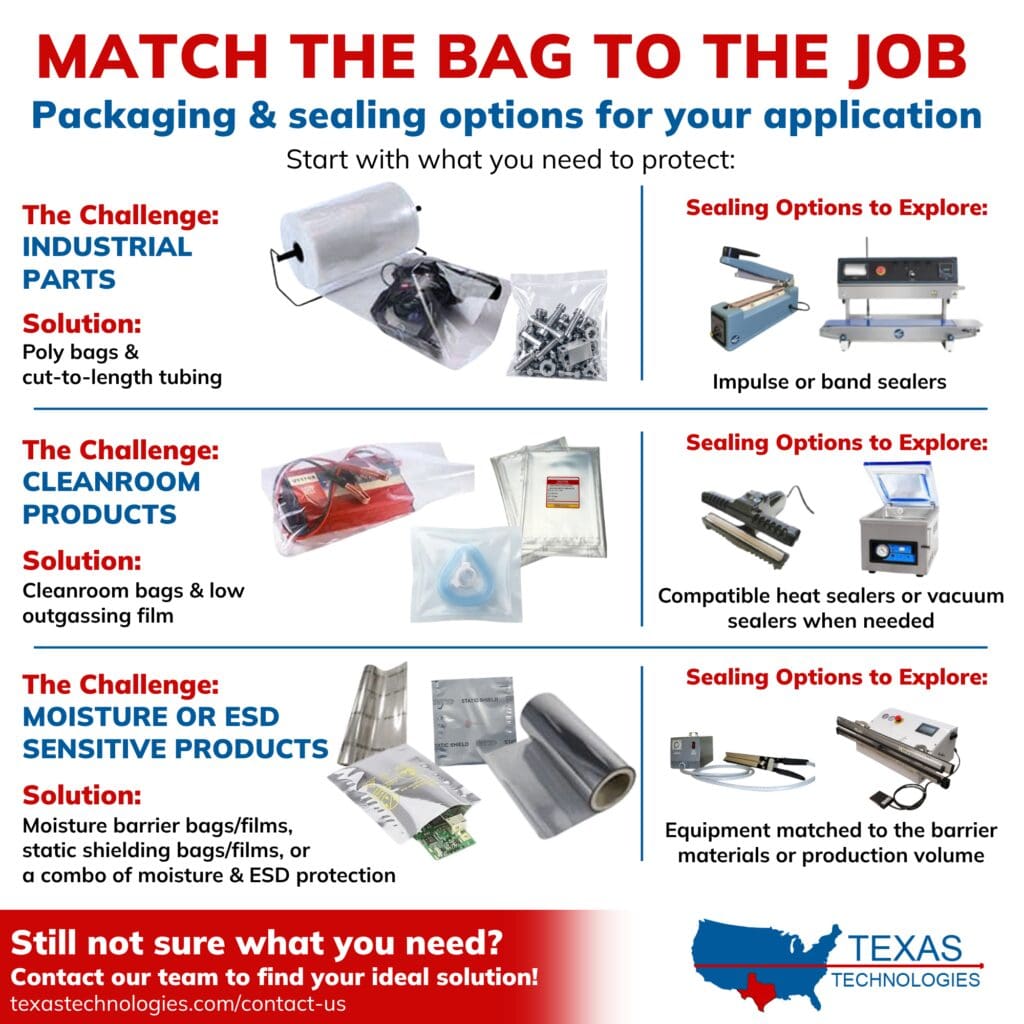
Protecting a product starts with choosing packaging that meets its needs. Industrial parts, sensitive electronics, and cleanroom components can require different materials – and the equipment used to seal those materials matters, too.
Texas Technologies offers a broad selection of bags, films, and specialty packaging, along with sealing equipment for a variety of applications. Last month, we explored different types of industrial sealers. Now we’re taking a closer look at how packaging materials and sealing options work together.
Here are three situations to consider when choosing your next packaging solution:
Packaging Industrial Parts in Different Sizes
 When your products vary in length or dimensions, stocking a separate bag size for every item can become complicated. Premade industrial poly bags provide a convenient option for consistently sized products, while tubing offers flexibility for items that need different package lengths.
Texas Technologies carries industrial bags and tubing, including clear polyethylene options. Tubing can be cut to the required length and heat sealed to create a package suited to the product.
Sealing Options to Consider
The right equipment depends on the material’s thickness, the required seal length, the package’s size and weight, and the number of packages being processed.
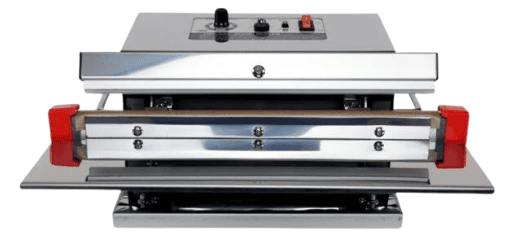
Impulse Sealers
For compatible polyethylene materials, an impulse sealer may provide a practical starting point. Impulse sealers apply heat during the sealing cycle and are available in configurations suited to different packaging tasks.
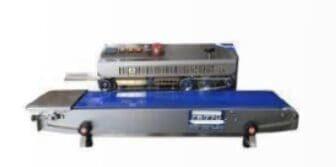
Band Sealers
For operations that need a continuous sealing workflow, a band sealer may also be worth exploring.
Packaging Products with Strict Cleanliness Requirements
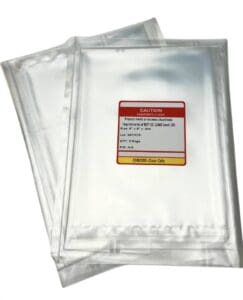 Cleanroom bags help protect contamination-sensitive products such as semiconductor wafers, precision parts, optical components, and medical device components. For these contamination-sensitive products, packaging selection goes beyond finding the right dimensions. The material’s cleanliness, additives, and outgassing characteristics may also affect its suitability.
Texas Technologies offers several cleanroom bag and tubing options, including CLEANTUFF® poly packaging and ULO POLY FILM® ultra-low-outgassing packaging.
CLEANTUFF packaging is designed for applications with demanding cleanliness requirements. ULO POLY FILM is engineered for critical products requiring low ionic contamination and ultra-low outgassing, and Texas Technologies identifies it as an option for vacuum packaging applications.
Sealing Options to Consider
Selecting equipment for these applications involves reviewing both the film’s sealing requirements and the conditions in which packaging takes place. A cleanroom material should be matched with a sealing process that supports the product’s handling and contamination-control requirements. Compatible heat-sealing equipment can close cleanroom bags or create packages from tubing.

Vacuum Sealers
When the sealing process also requires air removal, a vacuum sealer like the Accu-Seal Model 235 Vacuum Pouch and Bag Sealer may be appropriate.
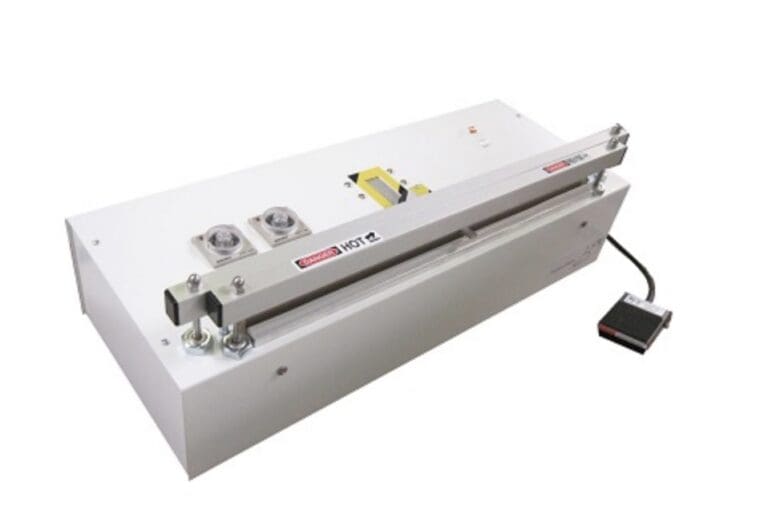
Cleanroom Compatible Impulse Sealers
Cleanroom-compatible impulse sealers like the Accu-Seal Model 30 Bag and Pouch Sealer create secure heat seals in compatible bags and films when air removal isn’t needed.
Gusseted Bags
Gusseted bags provide a flat surface for bulky contents and may improve stacking within a shipping container.
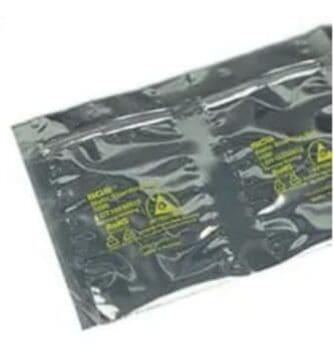
Compartment Bags
Compartment bags separate contents within one bag through vertical heat seals.

Tamper-Evident Rip Top Bags
Tamper-evident rip-top bags combine an initial heat-sealed closure with a zipper that allows access after the top is removed.
Sealing Options to Consider
Barrier packaging should be matched with equipment capable of sealing its specific material structure and thickness. Bag width, seal requirements, and production volume also help determine the appropriate machine.
Vacuum sealing may be an option when air removal is part of the packaging process, but not every moisture barrier application requires it. The bag’s protective properties and the finished seal both contribute to package performance.
Does Every Bag Need a Heat Sealer?
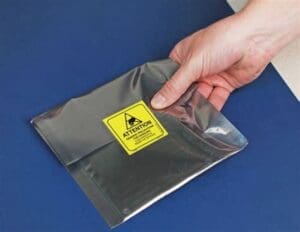 Some packaging formats offer other closure methods. Texas Technologies lists tape-top bags with reusable adhesive closures, as well as certain open-top bags that can be folded and secured with ESD tape or an ESD label.
The appropriate closure depends on the protection the application requires. A convenient resealable closure should not automatically be treated as equivalent to a specified heat seal.
Texas Technologies also offers specialty tapes for packaging, cleanroom, ESD, and other applications.
Find the Right Packaging and Sealing Combination
Choosing bags and sealing equipment together helps ensure that both suit the job. Start with the product, the protection it needs, and the packaging material, and then consider the equipment and workflow. Explore our Packaging & Foil selection or browse our Sealer Sales Catalog, for ideas. If you’re still not sure what you need, the team at Texas Technologies is here to help you find your perfect packaging and sealing solutions! Contact us today to share your product dimensions, production volume, and any special handling or process requirements and we’ll help you create the most effective packaging for your products.